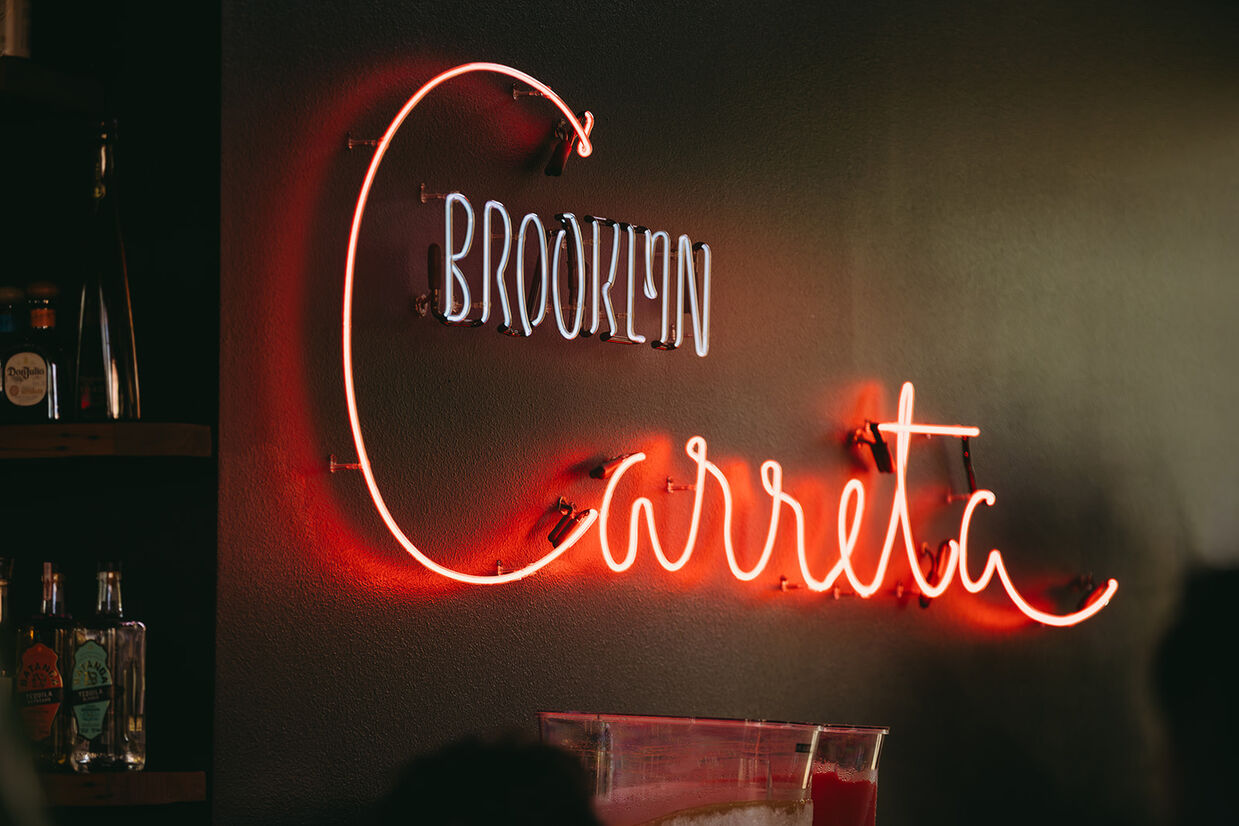
A food cart pod wedding is one of the smartest non-traditional wedding formats out there, and Portland couples are beginning to catch on. I recently coordinated a wedding weekend for around 110 guests: brunch in Cascade Locks, a reception at Brooklyn Carreta, a food cart pod on SE McLoughlin, and a Sunday picnic at Willamette Park. Two dogs walked as ring bearers, a newborn joined the processional, and the couple skipped traditional catering entirely in favor of 15 food carts serving throughout the night.
It worked. Here is what it took, what it cost, and what every couple considering a Portland food cart pod wedding should know before booking.
A new kind of Portland wedding reception
Something is shifting in how couples are planning weddings, and I am here for it.
Gen Z couples are spending mindfully, prioritizing experience over aesthetic, and pushing back against the idea that weddings have to follow a specific formula. Decor is minimal and meaningful. Money goes where it matters to the couple. Guests come first, and that often looks like generous food, an open bar, and a relaxed environment over a sit-down dinner with matching everything.
The food cart pod wedding is one of the best expressions of this shift.
What is a food cart pod wedding?
Instead of hiring a traditional caterer, the couple rents space at a food cart pod and guests order directly from the carts throughout the night. Tabs are set up on the couple's behalf so guests never pay. Food carts operate as they normally would, and the reception runs as an open, flexible dinner with substantially more menu variety than any single caterer could offer.
It is interactive, low-pressure, and uniquely Portland.
Why Portland couples are choosing the food cart pod wedding format
Cost matters, but it is not the only reason couples choose this route. The format matters too.
A food cart pod wedding lets guests move. They can grab Mexican from one cart, circle back for Thai an hour later, and end the night with soft serve. Guests linger. People talk. Kids run around. It is a reception that feels like a party instead of a production.
Another underrated advantage: no dietary restriction stress. With 15 carts spanning dozens of cuisines, there is something for everyone: gluten-free, vegan, vegetarian, allergies, picky eaters. Guests choose what works for them. Couples do not have to track down menus, modify dishes, or worry about someone going hungry. The variety does the work.
What a Portland food cart pod wedding costs
Traditional Portland wedding catering runs $75 to $150 per guest for food alone, before bar, rentals, staffing, or service charges. For a 110-guest wedding, that puts food spend in the $8,200 to $16,400 range, and that is the lower-to-middle end of the market.
This couple's total food cart spend came in at roughly $30 per guest, tips included. Across 15 carts and over 100 guests, the food budget was a fraction of what traditional catering would have cost. They also met a bar minimum at Brooklyn Carreta ($3,000) rather than paying a venue rental and staffing fee. That minimum is the floor for bar spend, not an added cost. It is a built-in bar budget.
The net result: 110 guests fed and imbibed, a wide variety of food, every vendor paid fairly, generous tips. All for significantly less than a comparable traditional Portland wedding would have cost.
Zero rentals: the hidden savings of a food cart pod wedding
One of the biggest hidden savings of this format deserves its own section: no rentals.
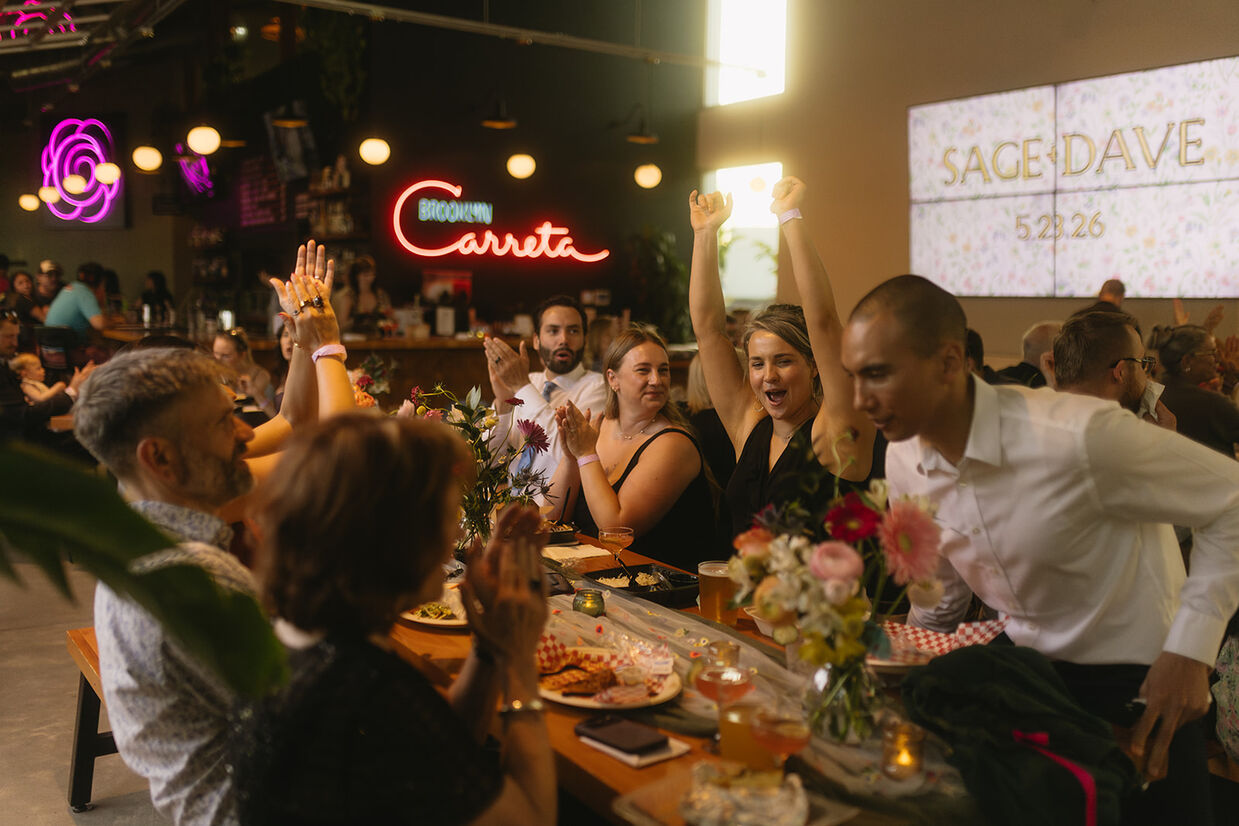
The ceremony at Thunder Island in Cascade Locks needed only a sign, some homemade ribbon bunting, and flowers. Brunch at Gorges Brewing, already a stunning space, needed only more ribbon, flowers, and a few runners. For the reception, the couple reused the same flowers from brunch, the same runners, and added a few tea light candles. All thrifted.
Brooklyn Carreta itself was already vibey and full of character. Almost no decor needed. No catering rentals. No bar rentals. No tables, chairs, or place settings. The space came complete. That is a meaningful chunk of cost most couples do not factor in until they are deep in a traditional wedding budget watching the rental line items climb.
The star at every event was the welcome table. The couple created "Doggie Bags" featuring their dogs' faces, filled with baskets of favorite local items for guests: Ranger Chocolate, Smith Tea, tins of Jacobsen sea salt, and a combo bingo card and coloring sheet with markers. Many of the kids colored their cards and dropped them in the card box.
Dessert at a Portland food cart wedding
Dessert at a food cart pod wedding can be whatever you want. This couple brought in brownies from their favorite bar, Bar Bar inside Mississippi Studios. Genuinely some of the best brownies I have ever had. The dessert cart was set up to add ice cream for any guest who wanted a brownie sundae. Guests could also order crepes, milkshakes, or boba tea. Dessert became its own moment instead of a single cake cutting.
The real logistics of a Portland food cart pod wedding
A food cart pod wedding has a lot of moving parts. Instead of one caterer with one timeline and one invoice, you are coordinating multiple independent vendors who each have their own pace and payment systems. Here is what couples and planners need to think through up front.
Tab management
Who closes out the tabs at the end of the night? This couple handed me a credit card and approved a 20% tip across the board. One thing that was not communicated up front: the assumption that all carts would stay open until 10 PM. When I met each cart before guests arrived, operators began telling me their planned closing times, which were all over the map. The fix was simple: an iPhone alarm set for 10 minutes before each cart's closing time. This is now something I ask about up front on every food cart event.
Wristbands
Guests need a visible cue that they are with the wedding so carts know which tab to put their order on. This couple used purple wristbands for guests 21 and over and green for under 21. Either color meant the guest was eating on the couple's tab. You need one central entry point staffed by someone who can check IDs and distribute the right wristband. Standard plain wristbands work fine, but customization could add a small unexpected detail.
Public and private space sharing
Brooklyn Carreta is also open to the public, and it was busy that night. The couple rented half of the indoor seating, half of the outdoor patio, and half of the bar. We marked off the wedding side using stanchions with ribbon bunting strung between them as a visual divider. It looked great and matched the laid-back vibe of the night. The bar ran as an open tab with a required minimum, and there was no separate charge for the venue space.
Communication with the carts
Some carts knew about the wedding weeks in advance. Others did not know until the day of. A few had moved to a different pod entirely by the time the wedding arrived. If you have a favorite cart, be comfortable with the possibility that they may move between booking and your wedding day. The good news: there are always great options.
Special items and appetizers
This couple ordered dolmas, salad rolls, and crab rangoons as tabled appetizers, and quesadillas as a late-night snack. One detail that was overlooked: serving utensils for the tabled apps. With no rentals and no caterers, it is easy for small things like that to slip through. Build a "day-of details" checklist that covers everything a caterer would normally provide automatically.
Hire a DJ who is also a great emcee
This might be the most underrated piece of a successful food cart pod wedding: hire a DJ who is genuinely good at making announcements. Not someone who reads them off a list begrudgingly, but someone who can capture a room's attention, work a mic, and bring people into the moment.
At a food cart pod wedding, guests are spread across the space, eating at different times, ordering from different carts, in and out of the patio. When it is time for the first dance, the toast, or the late-night snack drop, you need someone who can pull everyone back together. A great DJ-emcee is the difference between a smooth, joyful flow and a reception where half the room misses every key moment.
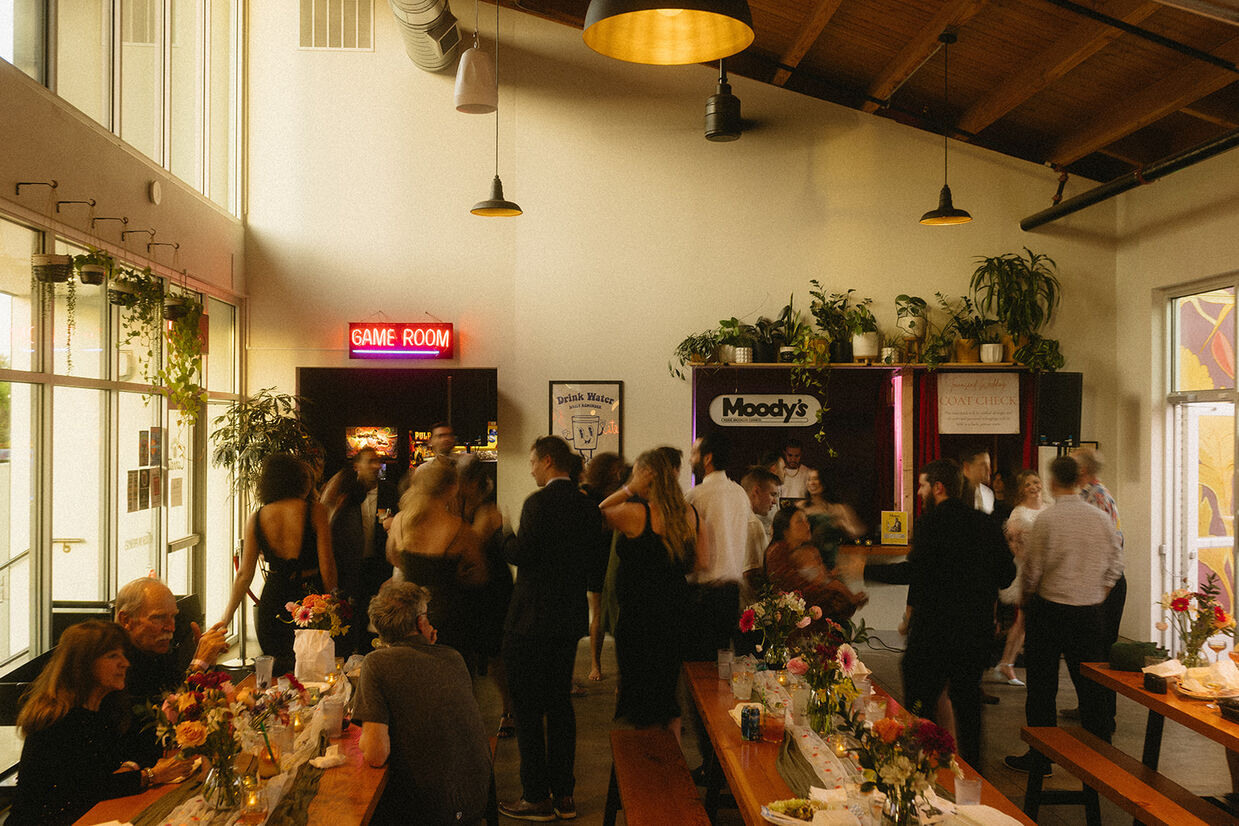
Add a coat check
At a traditional reception, guests have an assigned seat where they can leave their jackets and bags. At a food cart pod wedding, there is no assigned seat, and if the venue is partially open to the public, guests want a secure place to set their things down.
This couple purchased compact foldable coat racks, hangers, and numbered coat check tags. Small line item. Big difference in how cared-for guests feel.
How coordination adapts for a Portland food cart pod wedding
Coordinating a food cart pod wedding asks you to set aside the standard playbook. Here is how I adapted for this event.
- Day-of flexibility over rigid timing. A traditional timeline does not work with a food cart pod reception. Getting everyone fed took 30 to 45 minutes longer than anticipated, not because of wait times, but because guests ate whenever they wanted. My assistant and I walked the space to let guests know when key moments were coming so they would not miss the first dance or toasts.
- Guest communication in advance. I expected a lot of questions: where do I order, do I pay, what about the bar? This group adapted seamlessly, and I credit the couple. They communicated clearly through their wedding website and sent a day-before reminder outlining how everything would work. The DJ made strong, energetic announcements throughout the night. With an assistant coordinator at the entrance explaining the format on arrival, guests had the full picture before they set foot inside.
- Leftovers with intention. The couple asked me to donate two days' worth of food leftovers to an organization that could redistribute them. I chose St. Johns Village, a transitional housing community in my neighborhood. They were grateful. The brownies traveled to the Sunday picnic, and the remaining were frozen for the couple, similar to saving the top tier of a wedding cake.
Is a food cart pod wedding right for you?
A Portland food cart pod wedding is a strong fit for couples who:
- Want a relaxed, casual reception that prioritizes connection over formality
- Want menu variety and flexibility for guests with diverse dietary needs
- Are comfortable trading some predictability for personality
- Want to support small, local Portland food businesses
- Want meaningful cost savings without sacrificing food quality or quantity
- Have a coordinator who knows how to run this kind of event
It is probably not the right fit for couples who:
- Want a formal, plated, seated dinner experience
- Need rigid timing and predictability throughout the night
- Want a uniform aesthetic across food service
- Have a guest list with significant mobility limitations who would prefer table service
- Are uncomfortable with public sharing of space
Frequently asked questions about food cart pod weddings in Portland
How many food carts do you need for a food cart pod wedding?
For 100 or more guests, 10 to 15 carts gives you enough variety without overwhelming guests. For smaller weddings, 5 to 8 carts is plenty.
Do guests pay for their own food at a food cart pod wedding?
No. The couple sets up tabs with each cart in advance, and the coordinator closes out the tabs with tip at the end of the night. Guests just order using their wristband as identification.
Are food cart pod weddings cheaper than traditional catering in Portland?
Generally yes. For a 110-guest wedding coordinated by Higher Love, food cart spend came in around $30 per guest including tips, compared to $75 to $150 per guest for traditional Portland wedding catering. Couples also save significantly on rentals: no tables, chairs, linens, flatware, or place settings needed.
Is a food cart pod wedding right for us?
It works well for couples who want a relaxed reception that prioritizes guest experience over formality, want menu variety for diverse dietary needs, and are comfortable with some flexibility in how the night flows. It is not the right fit for couples who want a formal plated dinner, rigid timing, or a uniform aesthetic across food service.